


伺服电机翻译成英文
伺服电机翻译成英文
Servo Motor: The Backbone of Modern Automation
In the world of industrial machinery, few components are as crucial as the servo motor. This marvel of engineering is the unsung hero behind the precision and efficiency of modern automation systems. But what exactly is a servo motor? How does it differ from other types of motors? And why is it so essential in today's manufacturing landscape?
Let's dive into the details and uncover the secrets of the servo motor.
What is a Servo Motor?
A servo motor is a type of motor that is controlled by a feedback system. Unlike traditional motors, which rely solely on input signals, servo motors use feedback to adjust their output. This means they can achieve precise control over their speed, position, and torque, making them ideal for applications that require high precision.
The term "servo" comes from the Latin word "servus," meaning "slave." This reflects the motor's role in serving the control system by responding to its commands.
The Evolution of Servo Motors
Servo motors have come a long way since their inception. Early servo motors were large, bulky, and inefficient. Today's servo motors are compact, lightweight, and highly efficient, thanks to advancements in materials science and control technology.
One of the key innovations in servo motor technology is the use of permanent magnet materials. These materials allow for higher energy density, enabling servo motors to produce more torque with less current. This has made them more suitable for a wide range of applications, from industrial robots to consumer electronics.
Applications of Servo Motors
Servo motors are used in a variety of industries, including manufacturing, robotics, aerospace, and even healthcare. Their precision and reliability make them indispensable in applications where accuracy is critical.
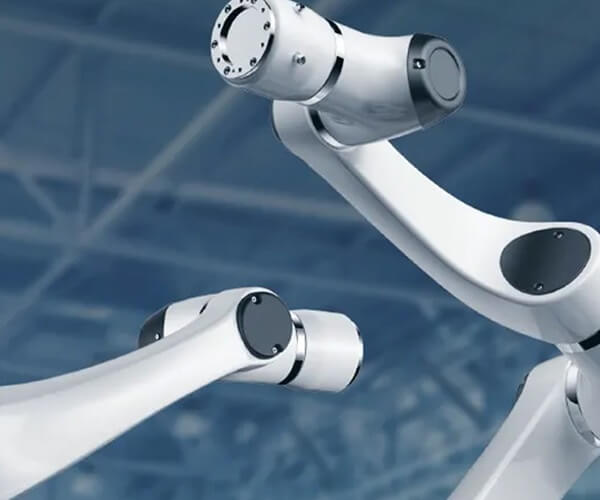
For example, in industrial robots, servo motors are used to control the movement of the robot's arms and hands. This allows for precise positioning and manipulation of objects, which is essential for tasks like welding, painting, and assembly.
In the aerospace industry, servo motors are used in control systems for aircraft. Their ability to respond quickly and accurately to commands makes them ideal for applications like flight control surfaces and engine management.
Key Parameters of Servo Motors
When selecting a servo motor for a specific application, it's important to consider several key parameters. These include:
- Power: The amount of power the motor can deliver.
- Speed: The maximum speed the motor can achieve.
- Torque: The rotational force the motor can produce.
- Positioning Accuracy: The precision with which the motor can control its position.
- Response Time: The time it takes for the motor to respond to a command.
Understanding these parameters can help you choose the right servo motor for your needs.
Choosing the Right Servo Motor
When selecting a servo motor, it's important to match the motor's specifications to your application's requirements. For example, if you need a motor for a high-speed application, you'll want to focus on speed and response time. If precision is your main concern, you'll want to look at positioning accuracy.
It's also important to consider the environment in which the motor will be used. For example, if the motor will be exposed to extreme temperatures or corrosive substances, you'll need to choose a motor that can handle those conditions.
Common Questions About Servo Motors
Q: What is the difference between a servo motor and a stepper motor?
A: While both servo motors and stepper motors are used for precise control, they differ in their operation. Servo motors use a feedback system to control their position, while stepper motors move in discrete steps without feedback.
Q: Why is a servo motor more expensive than a standard motor?
A: Servo motors are more complex and precise than standard motors, which makes them more expensive. They also use high-quality materials and advanced control systems, which contribute to their higher cost.
Q: Can I use a servo motor in my application?
A: Whether you can use a servo motor depends on your application's requirements. If you need precise control and high efficiency, a servo motor may be the right choice. If not, a standard motor may suffice.
Conclusion
The servo motor is a vital component in modern automation systems. Its ability to provide precise control and high efficiency makes it indispensable in a wide range of applications. By understanding the key parameters and choosing the right motor for your needs, you can ensure that your automation system runs smoothly and efficiently.
If you're looking for high-quality servo motors, look no further than伟创动力. With years of experience in the industry, we offer a wide range of servo motors that are designed to meet the needs of even the most demanding applications. Contact us today to learn more about our products and how they can benefit your business.
伟创动力Kpower成立于2005年,至今20多年历史,国内最早的舵机生产厂家,月产生65万件。伟创动力Kpower公司场地规模47000平米,拥有员工300多人,年产值超3亿元。伟创动力Kpower公司有用超过150项专利技术,获得了IATF16949 汽车质量体系认证,ISO14001产品质量体系认证,ISO9001产品质量体系认证,产品CE认证,产品FCC认证,同时伟创动力Kpower还获得了红点设计奖,得到了行业的非常多的奖项和认可。同时,伟创动力获得了行业的高度认可,合作服务的客户包含了世界500强企业华为,大疆无人机,雅迪电动车,美团无人机,追觅扫地机器人,方太洗地机器人,红旗汽车,比亚迪汽车,小鹏,小米,索尼,大族激光等超过500家大型企业,包含了各个行业的龙头领军企业,还有像航天集团这样的军工企业。而且,伟创动力的标准化产品远销全球,包含了美国,德国,巴西,意大利,韩国等诸多国家。